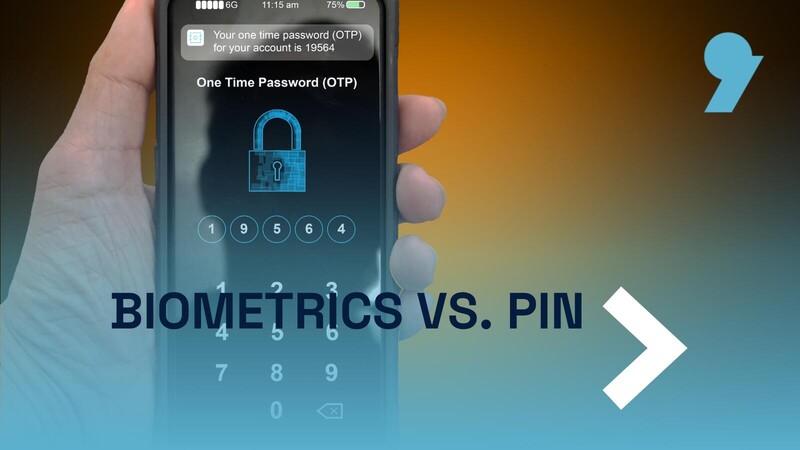
Biometric authentication feels like the future. Unlocking your phone with a quick glance or the casual tap of a fingerprint sensor is incredibly convenient.
Consumer technology manufacturers consistently market facial recognition and capacitive fingerprint scanning as the absolute pinnacle of personal device protection.
But from a legal and defensive standpoint, relying on your face or finger to secure your smartphone might be the single biggest security mistake you can make.
While biometrics do an excellent job of blocking casual nosey friends or opportunistic thieves, they fail dramatically when facing institutional observation, border checkpoints, or corporate espionage.
The critical flaw with biometric security isn't technological, it's legal. Under modern jurisprudence, a simple numeric PIN or password remains your strongest constitutional shield.
The Self-Incrimination Loophole: What You Know vs. What You Are
The legal vulnerability of biometric data hinges on a sharp, established distinction drawn by courts in many Western jurisdictions, including the United States and Canada: the divide between what you know (intellectual knowledge) and what you are (physical characteristics).
Under the Fifth Amendment to the U.S. Constitution (and equivalent common-law privacy protections worldwide), individuals are protected against self-incrimination. You cannot be legally compelled to testify against yourself or reveal the contents of your mind to state authorities without highly regulated legal maneuvers.
A numeric PIN, passcode, or long alphanumeric password exists solely within your mind. It is legally classified as "testimonial." Forcing you to surrender a passcode is legally equivalent to forcing you to take the stand and confess. Therefore, authorities must meet incredibly high evidentiary thresholds to obtain a specific warrant to compel a passcode.
Your finger, iris, and face, however, are legally classified as physical evidence, much like a DNA sample, a physical key, or a standard set of ink fingerprints.
Multiple court precedents have established that law enforcement or customs officials can legally compel an individual to place their finger on a device or look directly at a camera lens to unlock a smartphone; frequently without an explicit warrant.
If your phone is secured by a fingerprint, your physical body can be used as a key against your own data perimeter.
The Strategic Security of a Scrambled PIN
If you are traveling through international border crossings, handling highly sensitive corporate intellectual property, or simply value absolute personal liberty, numeric PINs and complex passcodes remain your primary defensive posture.
However, entering a PIN on a traditional touchscreen introduces its own set of technical vulnerabilities.
AphyOS addresses these risks through advanced hardware-level and interface-level protections built into the platform:
1. Defeating Grease-Pattern Tracking
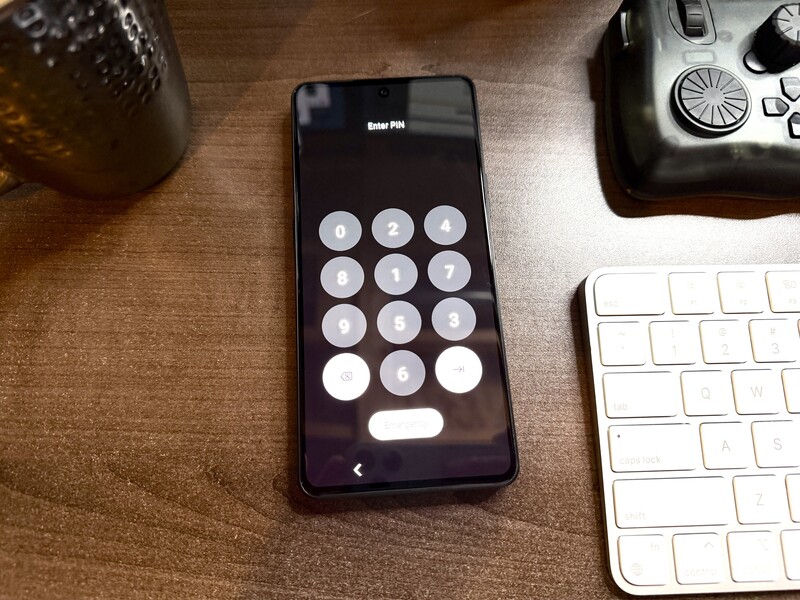
Traditional static number pads require you to tap the exact same coordinates on your glass screen every single time you enter your code. Over time, this leaves invisible oils and smudge patterns on your display. A sophisticated bad actor can hold your phone at an angle to the light, deduce your numbers based on grease-trail coordinates, and guess your passcode in seconds. AphyOS breaks this by continuously randomizing the numeric grid.
2. Eliminating the Danger of "Shoulder-Surfing"
Whether you are on a crowded train, in an airport terminal, or in a corporate boardroom, visual surveillance is a persistent risk.
Anyone watching your fingers or recording you with a security camera can easily map a standard static PIN layout based on the rhythm and position of your hand. Because AphyOS shifts button placements on every single wake cycle, visual observation reveals absolutely nothing about your actual combination.
Reclaiming Physical Trust
True mobile privacy requires an understanding of how technology and legal frameworks intersect in the real world. Convenience is frequently the enemy of authentic security.
By prioritizing robust, randomized physical PIN input systems over easily exploited biometric shortcuts, AphyOS helps users establish a clear, legally sound digital perimeter.
It ensures that your private data is fiercely protected not just from remote network hackers, but from physical, real-world exploitation.
Q&A: Biometric Law and Passcode Security
Why is a PIN legally safer than a fingerprint lock?
A numeric PIN or passcode is legally classified as "testimonial knowledge" because it exists inside your mind, protecting it under self-incrimination doctrines and requiring strict warrants to compel. A fingerprint or facial scan is classified as "physical evidence," meaning law enforcement or border authorities can often legally compel you to biometrically unlock your device without a specialized warrant.
What is shoulder-surfing in mobile security?
Shoulder-surfing is the practice of visually observing an individual while they interact with a device to steal sensitive information, such as passwords, PIN codes, or patterns. Attackers often accomplish this by watching hand movements in public spaces or reviewing high-definition footage from nearby security cameras.
How does a randomized PIN pad protect a smartphone display?
A randomized PIN pad changes the layout of the numeric keys on every single unlock screen. This ensures that the user taps entirely different screen coordinates each time they input their passcode, preventing the formation of predictable grease patterns and smudge trails that attackers use to deduce the numeric combination.
Does AphyOS support biometric bypasses on secure devices?
AphyOS prioritizes data sovereignty and structural privacy by emphasizing secure, randomized, hardware-isolated PIN mechanics. By stripping away unverified background face-tracking algorithms and encouraging intentional password entry, the platform seals the legal and physical loopholes introduced by conventional biometric shortcuts.
Read more

The Steps AphyOS Takes To Manually Clean Up Code
When a technology brand decides to manufacture a new smartphone, they rarely build the underlying software from scratch. Instead, they rely on a heavily outsourced supply chain. At the top of this chain, core operating system blueprints are governed by central ecosystem gatekeepers. Below them, silicon chip providers deliver the physical processors alongside foundational software...

The Next Apostrophy-Powered Smartphone is Now Shipping
The next AphyOS-enabled phone is now shipping. Punkt's MC03, announced at CES 2026 is now being deployed to customers across Europe.

Mobile Patient Zero
With employees using their smartphones as a device to access work tools, new vulnerabilities have opened up for bad actors to infiltrate corporate networks. These are some of the ways they're pulling it off.

The Real Cost of a Data Breach
Data breaches through smartphones continue to grow in frequency and cost. Here's how this is skyrocketing baed on the latest reports.