Why Your Phone’s Battery Level Was Never Just a Percentage
How a basic utility metric became an invasive tracking beacon and why true mobile privacy requires rethinking hardware security from the ground up.


Thinking of buying a Pixel just to flash GrapheneOS? Explore the real-world trade-offs of DIY privacy ROMs vs. out-of-the-box sovereignty on the Punkt MC03 with Apostrophy OS.
You probably know you should be wary to connect to a public Wi-Fi network, but did you know that just because you toggle off Wi-Fi, it doesn't necessarily mean your phone's not broadcasting vital info wirelessly. In this article we'll dig into how Wi-Fi and Bluetooth settings work on modern smartphones and when you should consider turning them off.
Enterprise security layers only work together when each layer can be trusted. IT, Compliance, and Fleet Managers are often left with the difficult task of verifying "sovereign" claims, but AphyOS can provide a fully sovereign tech stack when paired with sovereign hardware, like the Punkt. MC03.
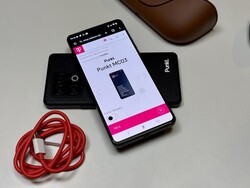
Europe’s largest telecommunications provider officially lists the German-built, Swiss-governed sovereign smartphone in its online shop.
Proton Mail is the privacy-focused mail application from Swiss-company Proton. Proton has a mission to promote internet privacy and data sovereignty as a right for all internet users. The article goes into a number of features in Proton Mail and instructions on how to use them.
Apostrophy, the independent European tech company behind the privacy-hardened AphyOS mobile operating system, has signed a definitive exclusivity agreement to execute a reverse takeover of London-listed cash shell Milton Capital Plc.
In This Article The Mechanics of the "Passive Ear" Inaudible Acoustic Leakage: The Stealth Threat Vector The Security Theatre of Software "Kill Switches" How AphyOS Enforces Absolute Acoustic Silence We've all experienced that unsettling modern phenomenon: you have a casual, spoken conversation with a friend about a niche product, a destination, or a business goal. You never...
While biometrics do an excellent job of blocking casual nosey friends or opportunistic thieves, they fail dramatically when facing institutional observation, border checkpoints, or corporate espionage.
AphyOS is built on a foundation of hardware-rooted trust and secure boot verification. It passes standard Android Open Source Project (AOSP) security integrity checks out of the box. But sometimes this results in warnings from banking apps. Don't worry. It's not your phone. It's the banking sysem.
In This Article The Illusion of Application-Layer Security Deep Engineering: The Low-Level Difference Why Hardware Partnerships Matter 🔒 TL;DR - The Short Version Verdict: Toggling app permissions on standard Android devices does not prevent kernel-level data harvesting; true mobile privacy requires hardware-bound cryptographic security. Strength: AphyOS leverages Swiss-...
Connecting your smartphone to a public, unsecured Wi-Fi network (whether at an airport, a bustling metropolitan café, or a hotel lobby) is never an ideal cybersecurity practice. From a pure risk-mitigation standpoint, entering an unencrypted wireless space exposes your device to immediate threats, ranging from passive packet sniffing to aggressive man-in-the-middle (MitM) attacks.
To maintain an uncompromised mobile ecosystem, the application delivery pipeline for AphyOS operates under a strict, multi-tiered curation framework. Unlike standard mass-market directories that prioritize catalog volume over software integrity, the ecosystem powering AphyOS relies on formal verification criteria to determine how applications are distributed, highlighted, or embedded...
When a technology brand decides to manufacture a new smartphone, they rarely build the underlying software from scratch. Instead, they rely on a heavily outsourced supply chain. At the top of this chain, core operating system blueprints are governed by central ecosystem gatekeepers. Below them, silicon chip providers deliver the physical processors alongside foundational software...
A new phone has entered the market that is powered by Apostrophy, the world's leading privacy-by-default operating system. The Punkt. MC03 is now shipping, giving users who want a more secure option for doing business, while still being able to use familiar apps, an excellent option for both hardware and software.
The next AphyOS-enabled phone is now shipping. Punkt's MC03, announced at CES 2026 is now being deployed to customers across Europe.
Running a secure app on a standard smartphone can easily undermine the methodical levels of security the app was built for. Pairing a privacy-centric OS with privacy-first hardware adds a more secure element for individuals and enterprise when using their devices for daily activities.
Because AphyOS operates completely free of Google Mobile Services (GMS), applications like Teams and Slack face a hard environment shift. The native Google libraries they rely on for push notifications, location triangulation, and licensing checks are completely absent.
A new social network focused on verifying and validating users to ensure bot-free, authentic interactions online has launched. W Social re-imagines the social media experience, grounding it with the legislative framework of European data privacy rules.
With employees using their smartphones as a device to access work tools, new vulnerabilities have opened up for bad actors to infiltrate corporate networks. These are some of the ways they're pulling it off.