TL;DR — The Short Version
- Verdict: The Apostrophy OS + Punkt. MC03 ecosystem delivers a fully audited, European-governed mobile stack that solves hardware-level data sovereignty.
- Core Strength: Absolute supply chain transparency, utilizing German physical assembly and a Swiss-hosted operating system infrastructure.
- Key Trade-off: A shorter, highly vetted component supply chain means sacrificing mass-market ecosystem compatibility (no native Google Mobile Services).
- Hardware Reliability: Uses hardware-rooted Verified Boot and eFuse technology to instantly detect any physical or firmware-level tampering at startup.
- Data Connectivity: All telemetry and data routing are strictly sandboxed and protected under the Swiss Federal Act on Data Protection (nFADP).
- Value Proposition: Mitigates NIS2 liability and EU Data Act compliance risks by removing black-box jurisdictions from the enterprise mobile fleet.
In the world of corporate technology procurement, efficiency and low cost have historically dictated strategy. This focus has created a hyper-globalized, opaque mobile hardware supply chain where a single device relies on components from dozens of untrusted jurisdictions. For modern enterprise leaders, this lack of transparency is a glaring vulnerability.
A sovereign supply chain represents a fundamental shift away from this model. It is a production lineage where every single step (from initial design and firmware engineering to component sourcing and final physical assembly) takes place within secure, transparent, and politically stable jurisdictions governed by strict data privacy and rule-of-law frameworks.
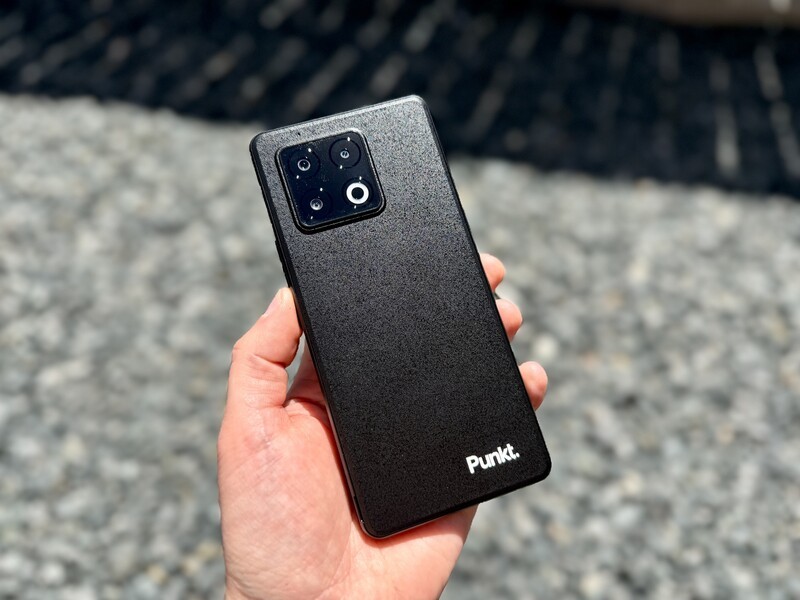
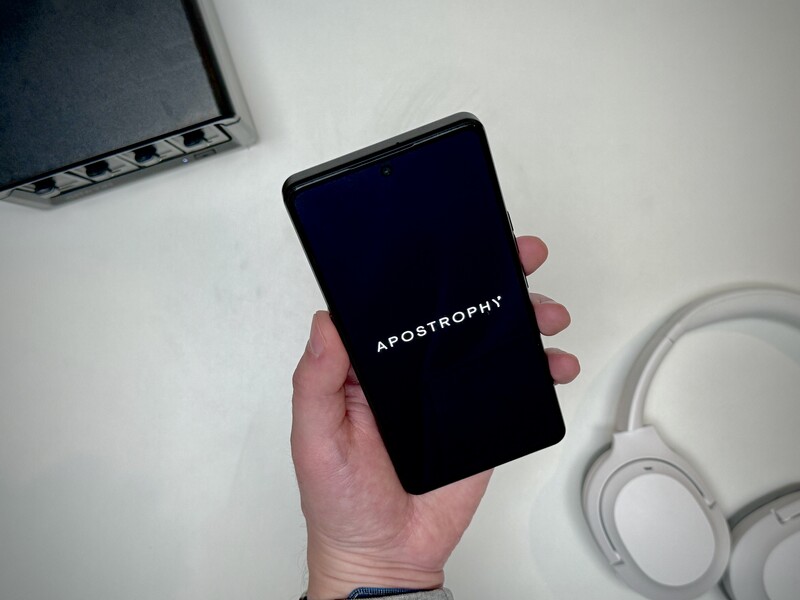
This is a key aspect of how Apostrophy is able to work with OEMs like Punkt. and their MC03 to offer customers a level of security that is unmatched in the modern smartphone era.
Why It Matters: Security Below the Application Layer
Most mobile security discussions focus entirely on application-layer encryption (like using an encrypted messaging app or a secure browser).
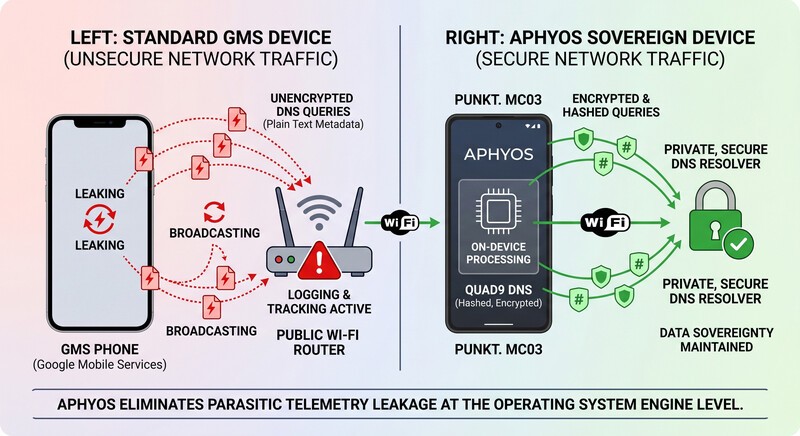
But if the underlying operating system is constantly leaking metadata, software-level encryption is built on a cracked foundation. This vulnerability becomes glaringly obvious during "risky" daily activities an employee might engage in on a cmopany phone, such as connecting to an unencrypted public Wi-Fi network at a coffee shop or airport.
On a standard device, the operating system immediately taxes your privacy, constantly broadcasting background telemetry, location logs, and unencrypted DNS queries directly to the untrusted local router.
AphyOS solves this below the application layer by fundamentally altering how the device interacts with a hostile network.
Built to be entirely free of Google Mobile Services (GMS), the OS eliminates that parasitic background chatter at the engine level so your phone stays completely quiet on public networks.
Simultaneously, AphyOS overrides default network properties to force all outbound web queries through Quad9—a secure, private DNS resolver. Because your web requests are cryptographically hashed directly on the device before they ever hit the local wireless access point, public Wi-Fi providers are mathematically blocked from logging or tracking your digital footprint.
By pairing this network-layer quietness with a GrapheneOS-backed Sandboxed Apps framework that isolates untrusted applications from your secure data profiles, Apostrophy ensures your sovereignty remains intact from the network architecture down to the physical silicon.
Security Across Smartphone Carriers
When navigating across European borders, traditional smartphones continuously leak device identifiers, cell-tower triangulation records, and analytics packets to network servers.
AphyOS blocks this telemetry harvesting through a strict hardware-level baseband isolation architecture that treats the cellular modem as an untrusted, completely isolated component. By physically separating the application processor from the cellular baseband, low-level encrypted hand-offs and cell tower transitions required by Tier-1 networks like Deutsche Telekom, Vodafone, and Orange are handled natively on the silicon layer without exposing the rest of the operating system.
At the software layer, AphyOS actively intercepts and strips out standard IMS and VoLTE carrier-side tracking metadata, preventing commercial providers from compiling diagnostic or system-performance logs.
This architectural boundary ensures seamless, uninterrupted 4G/5G data roaming, text routing, and VoLTE voice calls across multiple jurisdictions.
The result is an entirely anonymous and auditable connection endpoint that preserves full operational utility while blocking network carriers from mapping background device activity.
Aligning with European Legal Policies
This shift toward sovereign manufacturing is no longer a luxury; it is a regulatory mandate driven by changing legislative frameworks in Europe.
The European Data Act
The EU Data Act: Shifting heavily into its strict enforcement phase, this regulation demands absolute clarity regarding data ownership and the prevention of unauthorized international data transfers.
Consequences under the EU Data Act require individual EU Member states to write their own national legislature which includes outlining penalties. A few examples include:
- Germany: The Federal Network Agency holds the power to levy fines up to €5,000,000 or 4% of global annual turnover.
- France: Under the SREN Law framework, organizations face a base penalty of 3% of revenue, scaling up to 5% of global annual turnover for repeat compliance offenses.
- Netherlands: The statutory limits cap data access violations at €1,000,000 or 10% of EU-wide annual turnover.
NIS2 Directive
The NIS2 Directive: This directive legally requires organizations in highly critical sectors—such as energy, water utilities, and public administration—to strictly address and secure their technology supply chains or face heavy regulatory liability and financial penalties.
Under the NIS2, Essential Entities, which are organizations in highly critical sectors like energy, water, finance, transport, and health) face maximum fines of at least €10,000,000 or 2% of total worldwide annual turnover from the preceding financial year, whichever is higher.
Similarily, "Important Entities" in mid-tier or auxiliary sectors (manufacturing, digital providers, waste management, and postal services) face maximum fines of at least €7,000,000 or 1.4% of total worldwide annual turnover, whichever is higher.
These financial consequences are deliberately severe, highlighting the level of respect organizations must provide for their user's private data.
A sovereign supply chain, like the one achieved with the combination of Apostrophy as an operating system and Punkt. MC03 as a privacy-focused smartphone, provides the verified lineage necessary to satisfy these compliance standards, protecting infrastructure from both cyber threats and regulatory penalties.
The Sovereign Standard: Apostrophy and the Punkt. MC03
For organizations and individuals seeking a mobile device that fully embodies the philosophy of a sovereign supply chain, the combination of Apostrophy's AphyOS and the Punkt. MC03 is the premier choice on the market.
| Layer | Sovereign Stack Component | Core Security Mandate |
|---|---|---|
| Top | AphyOS Software | Swiss-Governed, Privacy-First Operating System |
| Middle | Punkt. MC03 Hardware | Designed in Switzerland, Secure Boot, eFuse Tech |
| Lineage | ▲ Auditable Connection | Strict Custody Chain Verification |
| Base | Sovereign European Supply Chain | Strict Transparency, Auditable German Assembly |
This partnership bridges the gap between secure software and secure hardware, forming a complete European "Sovereign Stack." Engineered by the Swiss-based consumer electronics brand Punkt., devices like the MC03 are built with a clear, shorter, and transparent supply chain.
When powered by Apostrophy, the system utilizes specialized hardware-rooted features like Verified Boot backed by eFuse technology. At every single startup, the operating system directly communicates with the physical architecture to verify that the device's firmware and components have not been tampered with or modified. Furthermore, all data routing and operational telemetry are governed under the strict rigors of the Swiss Federal Act on Data Protection (nFADP), providing a jurisdictional shield completely immune to extraterritorial overreach.
To achieve true digital sovereignty, the hardware beneath your fingertips cannot remain a black box. The Apostrophy and Punkt. MC03 ecosystem delivers the auditable lineage that modern data security demands.
Read more

Enterprise Smartphone Security: Why a Sovereign OS Fits Business
Enterprise security layers only work together when each layer can be trusted. IT, Compliance, and Fleet Managers are often left with the difficult task of verifying "sovereign" claims, but AphyOS can provide a fully sovereign tech stack when paired with sovereign hardware, like the Punkt. MC03.

Taking On Big Tech: Apostrophy + Punkt. Set Sights on the LSE
Apostrophy, the independent European tech company behind the privacy-hardened AphyOS mobile operating system, has signed a definitive exclusivity agreement to execute a reverse takeover of London-listed cash shell Milton Capital Plc.

The actual cost of "free" online services
While services provided by Big Tech may not cost you money, they do cost your privacy. This article explores how companies like Google make billions of dollars by tailoring custom advertisements to the individual by collecting data on them via multiple methods.

Why you want to pay for Proton (and maybe why you don't)
Proton provides a suite of productivity applications that combine convenience and ease of use with enhanced data protection and privacy. Explore why upgrading from the free Proton apps to the paid versions is likely right for many users, but maybe not all.