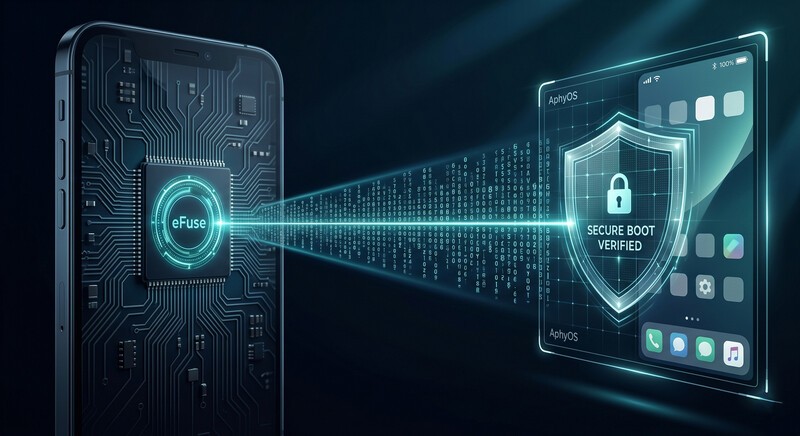
In today's mobile environment, software-level security is no longer a sufficient defense against sophisticated attacks.
When a device relies only on software to protect its data, it remains vulnerable to any actor capable of compromising the operating system itself.
To achieve true data sovereignty, security must move from the software layer down into the physical hardware.
AphyOS accomplishes this by locking the "digital front door" of the device, creating a Hardware Root of Trust.
Here is how the AphyOS architecture uses Platform Signing Keys and eFuses to ensure a device is physically incapable of running untrusted code.
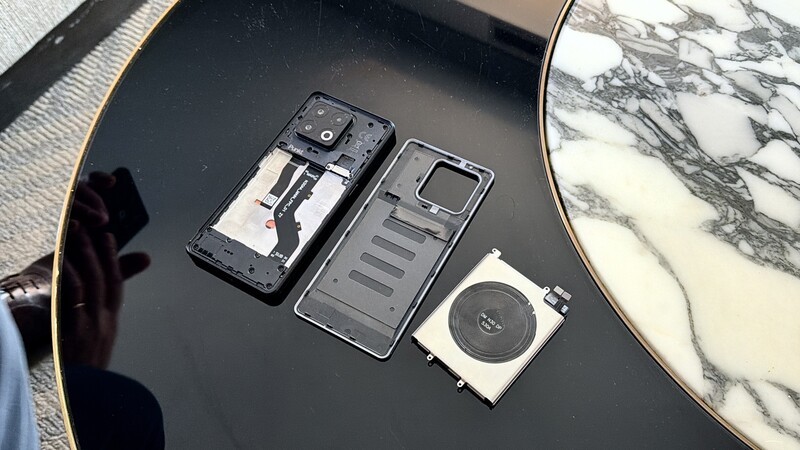
The Digital Wax Seal: Platform Signing Keys
At the center of the AphyOS model are Platform Signing Keys. On many standard devices, the hardware is "open," meaning it will execute almost any code it is given. To secure a production-ready device, every critical component of the OS (from the initial boot code to the kernel) must be digitally signed.
These keys act as a unique, unbreakable wax seal. Before the phone's processor executes a single line of code, it looks for this seal. If the seal is missing, or if the code has been tampered with and the seal is broken, the hardware immediately halts the boot process.
This ensures that the only software capable of running on the device is the genuine version provided by Apostrophy.
The Chain of Trust: Verified Boot
Security is not a single event. It's a sequence. AphyOS employs a Verified Boot process, which establishes a "Chain of Trust" that begins the microsecond you press the power button.
- The Preloader: The very first code to run is verified by a key permanently burned into the hardware.
- The Bootloader: Once the preloader is confirmed, it verifies the next link: the bootloader.
- The Operating System: The bootloader then verifies the integrity of the operating system kernel.
If any link in this chain is modified, the chain breaks and the "front door" stays locked. This prevents common vulnerabilities where malware tries to hide deep in the boot sequence, as the hardware will refuse to load a compromised system.
The Point of No Return: Blowing the eFuse
The most critical part of this security stack is ensuring it cannot be reversed. This is handled by a physical component on the silicon chip called an eFuse.
During the development phase, a phone's hardware is often "unlocked" so engineers can test different versions of the software. However, once the device is ready for the end user, engineers perform a process called "blowing the eFuse." This is a literal, one-way electrical event inside the chip.
By blowing the eFuse, the hardware is permanently instructed to only accept software signed with Apostrophy's specific keys. Once a fuse is blown, it cannot be reset. The device is now physically bound to the OS. This is the "Point of No Return" that guarantees a device can never be rolled back to an insecure state or loaded with an unauthorized operating system.
Why Hardware Sovereignty Matters
For IT professionals and developers, this architecture provides Physical Certainty. For corporations overall, this could be required to align with European legislation. We are moving away from a world where "Privacy" is just a setting you toggle in a menu. In the AphyOS model, privacy and security are physical characteristics of the hardware itself.
By locking the digital front door with eFuse technology and a rigorous Chain of Trust, AphyOS provides a level of integrity that software-only solutions cannot match. It ensures that the device you hold in your hand is running exactly what it was intended to run, with total sovereignty over the boot process.
Frequently Asked Questions
What is a Hardware Root of Trust in AphyOS?
A Hardware Root of Trust means a smartphone's security is anchored directly into its physical silicon chip rather than relying on software alone. AphyOS uses unchangeable hardware components to verify that the device is running secure, untampered code from the moment it powers on.
How do Platform Signing Keys protect AphyOS devices?
Platform Signing Keys act as a permanent, digital wax seal on the operating system. Before the phone's processor executes any code, it checks for this specific signature; if the code has been tampered with, the seal fails, and the hardware instantly halts the boot process.
What is the AphyOS Verified Boot process?
Verified Boot is a strict, sequential security check that creates a "Chain of Trust" during startup. The hardware first verifies the preloader, the preloader verifies the bootloader, and the bootloader verifies the core AphyOS kernel. If any link is modified, the boot stops immediately to block malware.
What does "blowing the eFuse" mean?
"Blowing the eFuse" is a permanent, one-way electrical event triggered on the smartphone's silicon chip during factory production. This process physically locks the hardware, permanently binding it to only accept official, signed software from Apostrophy and preventing attackers from rolling the device back to an insecure state.
Why is hardware sovereignty necessary for enterprise data?
Software-only security settings can be bypassed or compromised by sophisticated mobile threats. By embedding security features directly into the physical hardware, AphyOS gives IT professionals Physical Certainty that enterprise devices remain uncompromised and fully compliant with modern digital sovereignty laws.
Read more

AphyOS-enabled Punkt. MC03 now available through Deutsche Telekom
Europe’s largest telecommunications provider officially lists the German-built, Swiss-governed sovereign smartphone in its online shop.

Why Your Phone May Never Really Stop Listening
In This Article The Mechanics of the "Passive Ear" Inaudible Acoustic Leakage: The Stealth Threat Vector The Security Theatre of Software "Kill Switches" How AphyOS Enforces Absolute Acoustic Silence We've all experienced that unsettling modern phenomenon: you have a casual, spoken conversation with a friend about a niche product, a destination, or a business goal. You never...

Why Banking Apps Sometimes Flag Apostrophy OS
AphyOS is built on a foundation of hardware-rooted trust and secure boot verification. It passes standard Android Open Source Project (AOSP) security integrity checks out of the box. But sometimes this results in warnings from banking apps. Don't worry. It's not your phone. It's the banking sysem.

How AphyOS and the Punkt. MC03 Solve Android’s Hardware Security Blindspot
In This Article The Illusion of Application-Layer Security Deep Engineering: The Low-Level Difference Why Hardware Partnerships Matter 🔒 TL;DR - The Short Version Verdict: Toggling app permissions on standard Android devices does not prevent kernel-level data harvesting; true mobile privacy requires hardware-bound cryptographic security. Strength: AphyOS leverages Swiss-...