
2026 marks a transformative moment for smartphones. It has nothing to do with better cameras or a new metallic orange titanium colour. This time, it's about the millions of points of personal data our phones are processing and how that data is protected.
With the full implementation of the EU Data Act and the expanded oversight of the NIS2 Directive, there's now legislation in place to protect users by ensuring companies can verify their digital sovereignty.
And the grace period is over. The transition period is over. The apathy about protecting data is over.
Now, organizations have strict requirements to prove their digital sovereignty. This change was driven by a fundamental gap in infrastructure. While billions of dollars are spent fortifying and securing cloud servers, the devices that handle 60% of all internet traffic (our smartphones) have emerged as unmanaged liabilities to this protected data.
The regulatory landscape for mobile data has shifted from a period of transition into a cycle of mandatory enforcement. With the full implementation of the EU Data Act and the expanded oversight of the NIS2 Directive, organizations now face a strict requirement to verify their digital sovereignty.
Here is the breakdown of the legislative changes transforming the mobile industry and how a sovereign operating system addresses these new requirements.
The Berlin Declaration and the Push for Autonomy
The political foundation for this shift was solidified in late 2025 with the signing of the updated Berlin Declaration on Digital Society. All 27 EU member states committed to strengthening Europe's "Strategic Autonomy," specifically aiming to reduce dependency on non-European technology providers.

This movement is a response to research presented to European Parliament revealing a staggering dependency in our digital world. Over 90% of all Western data is currently stored on servers owned by U.S.-based companies.
For European organizations this is far bigger than a logistical hurdle. It means there's a direct conflict with local laws governing data residency.
The Jurisdictional Conflict: EU Data Act vs. US CLOUD Act
The EU Data Act, which moved into its enforcement phase in 2025 after being introduced in January 2024. It enforces strict rules on data storage and restricts third-country government access to sensitive information. This creates significant legal friction for any enterprise using a mobile operating system based in the United States.

Why worry about where the servers are located? The primary conflict lies with the U.S. CLOUD Act. This law allows U.S. authorities to request data from American companies regardless of where that data is physically stored, even if it is on a server in Zurich or Paris.
Because standard mobile operating systems are inherently tied to U.S.-based telemetry and cloud services, they cannot guarantee the "Strategic Autonomy" required by new legislation.
Apostrophy resolves this by anchoring all data residency in Switzerland. Under the Swiss Federal Act on Data Protection (nFADP), your data is shielded by a neutral jurisdictional framework, satisfying both European sovereignty goals and global security requirements.
NIS2 and the $10 Million Breach Reality
The NIS2 Directive mandates that "highly critical" sectors) including energy, healthcare, and finance) utilize infrastructure that is not subject to foreign surveillance. This requires a level of auditability that traditional "black box" mobile systems do not provide.
The financial motivation for this compliance is documented in the 2026 Cost of a Data Breach Report released by IBM, which shows the average cost of a breach has now surpassed $10 million.
A significant portion of these costs stems from endpoint compromise. Standard phones allow background "data leakage" between apps, which can act as gateways for sophisticated phishing scams.
Apostrophy's AphyOS architecture terminates this risk by segmenting your phone in several ways. Primarily, your most private apps are in a separate partition of your phone with only the most thoroughly vetted applications, scrutinized by AphyOS developers allowed into the vault. The Wild West section of the app allows uers to have a more traditional Android experience with one major change. Every single app, including the Play Store itself, lives within an isolated sandbox. This ensures that even if one app is compromised, the rest of the device (and the corporate network it accesses) remains isolated.
Why Apostrophy Meets the 2026 Standard
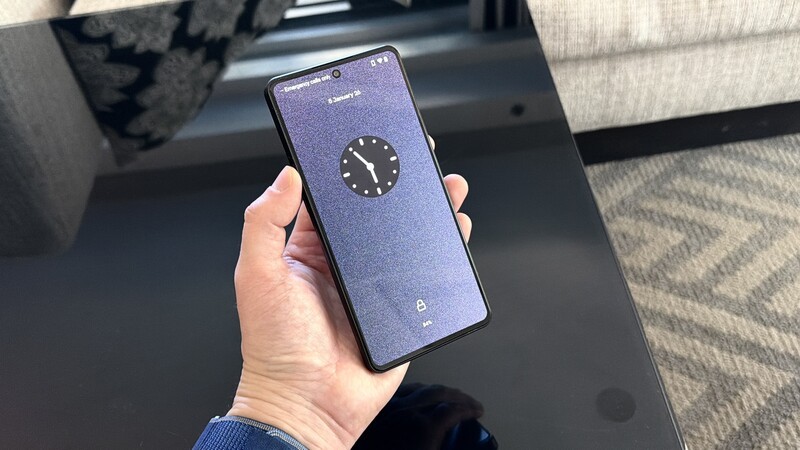
Apostrophy was developed to bridge the gap between hardware security and jurisdictional sovereignty. It fulfills the core requirements of the current regulatory environment:
1. Verified Hardware Integrity
Security must start in the silicon. This means the processor powering your phone's functions is the bedrock for all other security. Through hardware partnerships with Punkt. and Gigaset, Apostrophy ensures the "Root of Trust" is anchored in the hardware. Using eFuse technology, the device verifies the integrity of the operating system at every boot. If the system is tampered with, it will not start, protecting the kernel from deep-level attacks.
2. Proof of Data Residency
Unlike incumbent systems that relay telemetry to global servers, AphyOS allows organizations to prove exactly where their data lives. This is a baseline requirement for meeting the Data Governance Act standards. But also, the ease in which this can be achieved relieves major headaches for Chief Information Security Officers or other IT and security professionals preparing for on-going audits.
3. Functional Sovereignty
Legislation in 2026 emphasizes usability alongside security. As described earlier, Apostrophy provides a "Dual Zone" architecture:
- The Vault: A locked-down environment for audited productivity apps.
- The Wild Web: A sandboxed area for everyday apps, providing a separate identity on the same hardware without allowing data to bleed into the secure partition.
Aside from being compliant with this changing legislation, AphyOS also creates an environment where users can enjoy a high level of compatibility alongside a high level of privacy.
There are other secure operating systems that do a great job of fortifying the devices they're on. But often users are left with a fortress with no doors, meaning they have a device that's so secure it's a major inconvenience to use.
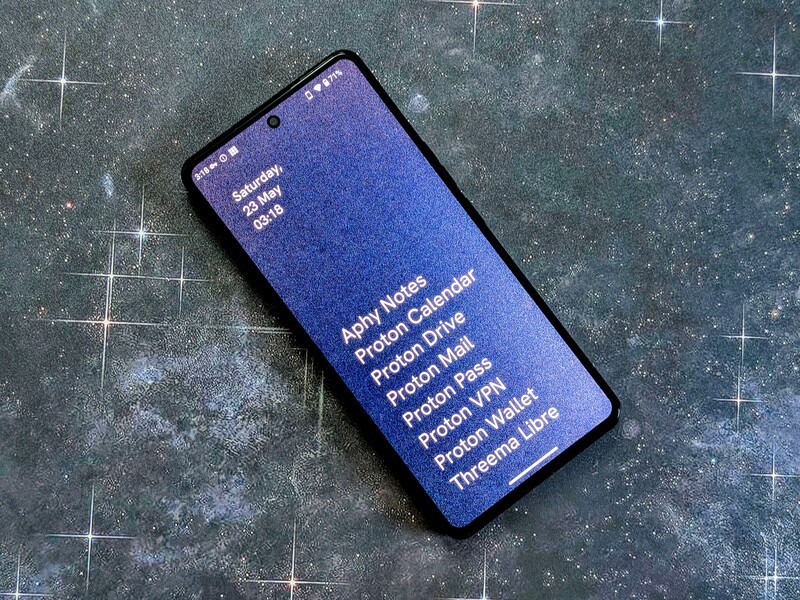
In the case of Apostrophy, OEMs like Punkt have worked alongside the AphyOS team for a ground up solution that's both private and highly compatible with the common apps that drive people's everyday lives.
The Turning Point for Mobile Infrastructure
The smartphone has evolved far beyond a convenient tool for checking work email or jumping on a conference call. It is a critical piece of digital infrastructure. It requires the exact same level of auditing, compliance, and legal protection as the corporate cloud servers we spend billions of dollars protecting.
The era of treating the phone in your pocket as a security afterthought is over. The days of accepting background data harvesting as the cost of doing business are over.
By aligning with the Swiss Federal Act on Data Protection and the EU Data Act, Apostrophy provides a definitive answer for organizations that need to prove their data belongs to them. In a landscape where the majority of all internet traffic travels on mobile hardware, digital sovereignty is the only clear path to a resilient enterprise.
FAQ
What is the EU Data Act and how does it affect smartphones?
The EU Data Act regulates data storage, sharing, and access across European organizations, requiring strict proof of digital sovereignty. Because mobile hardware handles roughly 60% of all internet traffic, standard smartphones are now under intense scrutiny. Traditional mobile operating systems automatically sync telemetry and cloud data with foreign servers, creating a direct compliance conflict for organizations trying to adhere to these local residency rules.
Why does the U.S. CLOUD Act conflict with European data privacy laws?
The primary conflict stems from jurisdictional authority. The U.S. CLOUD Act permits American law enforcement to request data managed by U.S.-based tech companies, regardless of whether that data is physically stored on servers in Paris, Zurich, or Silicon Valley. This law directly contradicts the EU Data Act, which strictly limits third-country government access to sensitive European information.
How does Apostrophy OS ensure digital sovereignty?
Apostrophy OS solves this legal friction by anchoring its entire data residency infrastructure in Switzerland, under the neutral framework of the Swiss Federal Act on Data Protection (nFADP). By routing and storing data outside of U.S. and EU jurisdictions, it eliminates the risk of foreign surveillance mandates while simultaneously satisfying the strategic autonomy requirements of the NIS2 Directive and the Berlin Declaration.
Can a secure operating system like AphyOS still run everyday apps?
Yes. Unlike traditional privacy-focused operating systems that sacrifice usability, Apostrophy features a unique "Dual Zone" architecture. It includes The Vault, an isolated, locked-down partition for audited corporate apps, and a separate sandboxed zone for everyday personal apps. This layout provides full app compatibility and a smooth user experience while entirely stopping background "data leakage" between the two environments.
Read more

The Swiss Shield: Why Data Sovereignty Starts in Your Pocket
In the high-stakes world of 2026, we've moved past the point where digital sovereignty is just a "nice-to-have" for the IT department. In many jurisdictions it is now a legislated mandate, and enterprise and corporate users need to be prepared to "show their receipts."

Meet Apostrophy - The Sovereign Operating System For Modern Smartphones
For those who want privacy that is unrivalled in the modern smartphone era, European corporations looking to comply with data privacy legislation, and enterprise professionals looking for a zero touch fleet solution, Apostrophy has become the go-to option as an OS in the sovereign smartphone space.

Enterprise Smartphone Security: Why a Sovereign OS Fits Business
Enterprise security layers only work together when each layer can be trusted. IT, Compliance, and Fleet Managers are often left with the difficult task of verifying "sovereign" claims, but AphyOS can provide a fully sovereign tech stack when paired with sovereign hardware, like the Punkt. MC03.

Taking On Big Tech: Apostrophy + Punkt. Set Sights on the LSE
Apostrophy, the independent European tech company behind the privacy-hardened AphyOS mobile operating system, has signed a definitive exclusivity agreement to execute a reverse takeover of London-listed cash shell Milton Capital Plc.