
Think about the smartphone sitting on your desk or in your hand right now. To most of us, it's just a tool for Slack, email, and the occasional coffee order. But to a CISO or a Risk Officer, that device may be a ticking financial and security time bomb.
Digital Soverignty - The laws that govern how your stored data is used, accessed, and protected are based on where it's stored, not based on where the user lives.
In the high-stakes world of 2026, we've moved past the point where digital sovereignty is just a "nice-to-have" for the IT department. It's now a boardroom survival tactic. Why? Because the price of a mistake has never been higher.
According to the latest data from IBM's Cost of a Data Breach Report, the financial hit from a single breach is climbing toward a staggering $10.22 million average for U.S. Enterprises. When you realize that the mobile endpoint is often the easiest way in, you start to see why "standard" security just doesn't cut it anymore.
The "Legal Skeleton Key:" Why Your Current OS is a Risk
Here's a scary but hard truth for C-suite executives, chief technology officers, and IT profesionals, or anyone who just cares about the "private" info on their phone: If you and your work team are using a mobile platform governed by foreign laws, you don't actually own your data, you're just borrowing it.
Take the U.S. CLOUD Act, for example. This law gives U.S. authorities a legal skeleton key to compel tech giants to hand over data, even if that data is stored in a "secure" vault halfway across the world. If your operating system comes from a "black box" provider in a foreign jurisdiction (like Samsung's Knox, or Microsoft's combination of Intune and Entra, all of which are excellent security tools), your data residency is essentially a hollow promise.
Then, there's the "telemetry tax." Research from Trinity College Dublin found that standard smartphones are constantly "talking" behind your back, sending identifiers and usage patterns to their developers every few minutes, even when the phone is just sitting in your pocket.
In a corporate environment, this metadata is a goldmine for anyone looking to map out your executive team's movements or trade secrets.
The Swiss Advantage: More Than Just Luxury Watches
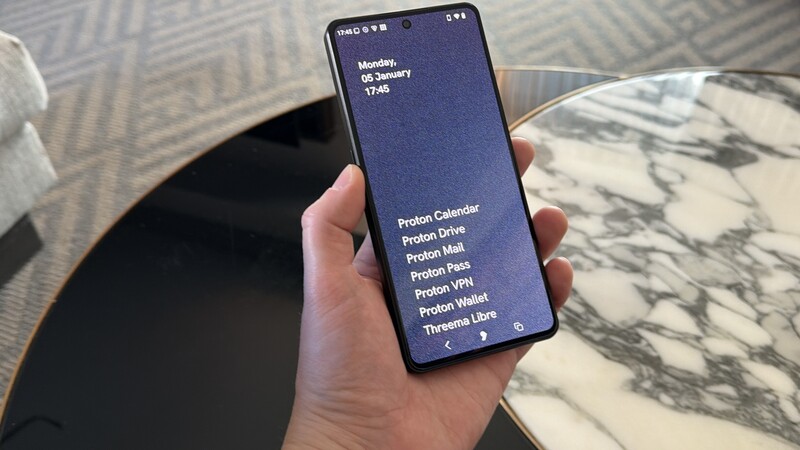
This is where the "Swiss Shield" comes in. While Switzerland is famous for its neutrality, that doesn't mean apathy. In fact, they're looking out for the rest of the world by providing a legal and technical fortress for something that not enough people are woried about: the soverignty of their data.
In September 2023, Switzerland leveled up its privacy game with the revised Federal Act on Data Protection (nFADP). This law aligns with the toughest global standards (like the GDPR) but keeps everything firmly under Swiss jurisdiction. Because Switzerland isn't part of major international intelligence-sharing alliances, it acts as a neutral "safe haven."
When your OS is built and governed here, a foreign agency can't just go on a "fishing expedition" for your corporate data. They have to respect a neutral, transparent legal process that is designed to protect privacy, not compromise it. This is exactly why smartphone makers from around the globe have been reaching out to Apostrophy. They know their hardware is secure for enterprise and prosumer and they want an operating system to match.
Sovereignty Under the Hood: The Apostrophy Way
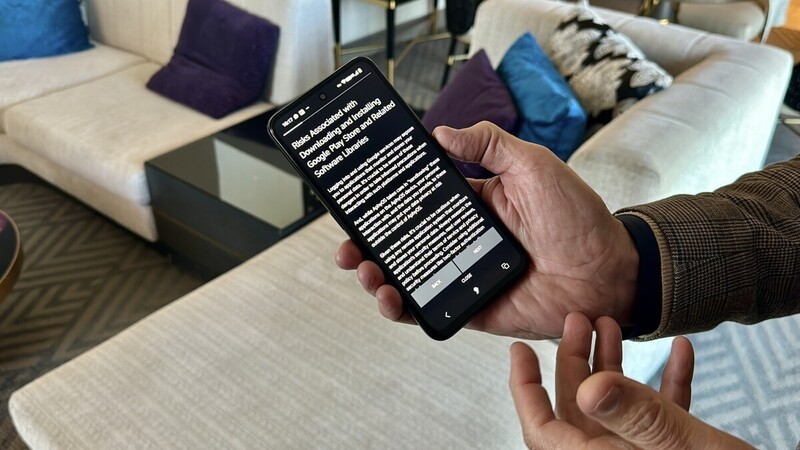
Building a sovereign OS isn't just about adding secure pieces on top of Android or any other OS. It's about rebuilding the engine from the ground up, and making sure anything added is stripped of all unnecessary garbage that could ultimately be a security liability.
Right now, Apostrophy is arguably the world leader in this space. The company creates a highly secure OS with Enterprise-ready features that are still actually useable by the average person. And this is important because many secure solutions end up being so frustrating to navigate, users will find workarounds to enjoy their familiar apps that allow them to "get stuff done," but those same apps could undermine the whoe point of having a secured corporate device.
Apostrophy has done this by creating a "Sovereign Stack" for every aspect of the smartphones it's available on:
Trust Your Hardware: They've partneedr with European manufacturers like Gigaset and Punkt. to make sure the hardware itself is transparent. No hidden backdoors in the supply chain. This isn't the Easy way to operate. In fact, it's tedious, difficult, and time-consuming. That's why most companies don't bother. Apostrophy does.
Hardened at the Core: Their kernel is stripped of the "fluff" that hackers love to exploit. They've built it to be lean, mean, and incredibly difficult to crack. It's absolutely key for security to ensure the bridge between the hardware and software is never compromised, and Apostrophy ensures this is the case every single time your phone boots up.
The Aphy Vault: Think of this as a digital panic room for your work apps. The Aphy Vault creates a strict "privacy bubble" around your professional data. It ensures that your important work messages and proprietary files stay totally isolated from the rest of the phone, meaning zero data "spillover" to personal apps or the OS itself.
The Wild West: If a phone isn't easy to use, people won't use it. They'll find workarounds, like emailing info from their secure phone to their "regular phone" because they want to add a GIF in a slide for a presentation, not realizing the data hijacking that can occur during that process. Apostrophy has a sandboxed version of Android that users can easily switch to in order to run apps that would never be able to install in the Vault, reflecting the real-world needs for convenience and compatibility that's part of users' daily lives.
The Bottom Line: Security That Pays for Itself
Switching to a sovereign infrastructure helps IT professionals sleep better at night. But, often, an overhaul like switching an entire fleet's OS has to make business sense as well. In the case of Apostrophy, a hardened and secure enterprise network means measureable finanical returns far beyond the inputs of paying $20-ish a month for a secure OS and hardware combintation.
Insurance companies are wising up to the mobile threat. According to Marsh McLennan's insights on cyber insurance trends, companies that use certified, hardened mobile endpoints can actually qualify for better insurance tiers. We're talking about potentially 14–20% lower annual premiums. When you factor in the millions you save by preventing even one breach, the "Sovereign Shift" starts to look less like an expense and more like a high-yield investment.
Reclaiming Your Pocket
For too long, enterprises have treated the smartphone as a "consumer" problem. But in a world where one mobile slip-up can cost $10.22 million, that's a gamble no one should take.
Sovereignty means taking back control. It's about a neutral home base, a clean supply chain, and a kernel you can actually trust. Moving to the "Swiss Shield," means you're not just giving your team a phone, you're giving your company a future that's designed for the modern digital era.
Read more

The Compliance Mandate: How Legislation is Transforming Mobile Data
Smartphone users in 2026 are searching for sovereign solutions. In some cases these are corporations and enterprise users looking to align with current compliance standards. Here's how legislations is driving change in the European smartphone climate and how Apostrophy has emerged as a top choice for a mobile OS.
Sovereign Hardware: The Essential Enterprise Smartphone Standard
For enterprise and pro users, knowing which laws govern their data is essential. That's why 2026 has seen the rise of the sovereign smartphone. People want to know where their data resides and how it's controlled. The only way to ensure your data stays your data is to choose secure hardware paired with a sovereign OS.

Enterprise Smartphone Security: Why a Sovereign OS Fits Business
Enterprise security layers only work together when each layer can be trusted. IT, Compliance, and Fleet Managers are often left with the difficult task of verifying "sovereign" claims, but AphyOS can provide a fully sovereign tech stack when paired with sovereign hardware, like the Punkt. MC03.
Taking On Big Tech: Apostrophy + Punkt. Set Sights on the LSE
Apostrophy, the independent European tech company behind the privacy-hardened AphyOS mobile operating system, has signed a definitive exclusivity agreement to execute a reverse takeover of London-listed cash shell Milton Capital Plc.