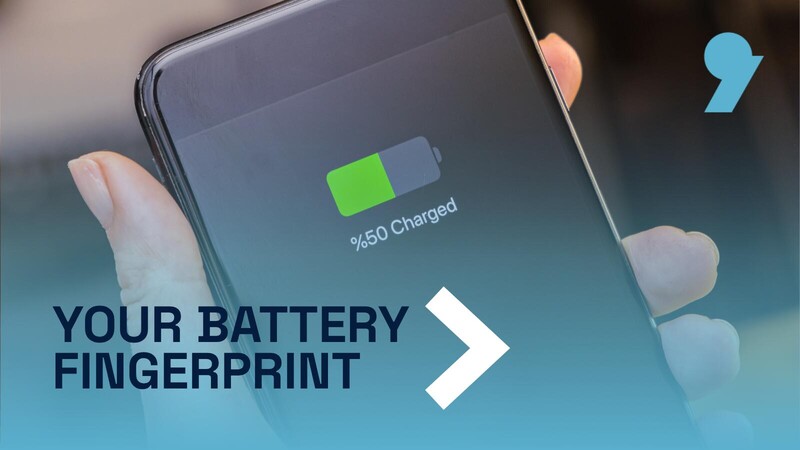
When you glance at the small battery icon in the top corner of your screen, you see a practical question: Do I need to plug in before heading to my next meeting?
To commercial data brokers and ad-tech platforms, that little icon represents something completely different: an unmonitored backdoor into your daily habits.
Most smartphone users assume privacy is managed through pop-up prompts. We expect our devices to ask for permission before accessing the camera, microphone, or GPS coordinates. But what happens when an application doesn't need your permission to monitor you?
That blind spot is where ambient hardware tracking thrives—and the story of how your battery level became a digital tracking beacon reveals how modern smartphone surveillance actually works.
The Flaw That Started It All: The Leaking Battery
In 2015, European cybersecurity researchers published a landmark study titled The Leaking Battery: A Privacy Analysis of the HTML5 Battery Status API (Olejnik et al.).
The premise was simple. When web standards committees designed the browser feature that lets websites check your battery level, they assumed exposing power status had "minimal impact on privacy." The rationale seemed reasonable: a site like YouTube might want to know if your battery is dying so it can lower video resolution and save your power. Because it seemed harmless, browsers allowed any website to query your battery stats without asking for permission or notifying you.
The researchers proved how dangerous that assumption was:
- Hardware Fingerprinting: No two lithium-ion batteries age identically. By reading raw battery metrics down to multiple decimal places, tracking scripts could measure the physical wear and degraded capacity of a specific battery. In seconds, that microscopic imperfection created a unique fingerprint for that exact machine.
- Resurrecting Deleted Profiles: When combined with calculated battery drain speeds, your phone generated millions of possible distinct states. If you cleared your browser cookies or switched into private browsing, tracking scripts could simply read your continuous battery discharge curve and link your new session right back to your old identity.
The discovery forced web browsers into damage control. Apple's Safari rejected the feature, Firefox removed it, and Princeton University researchers documented tracking companies actively exploiting battery readouts in the wild on major commercial websites.
The Modern Threat: Why This Matters for Today's Mobile Fleets
While browsers patched that specific web loophole, the underlying principle never went away: any unmediated hardware metric can be turned into an identifier.
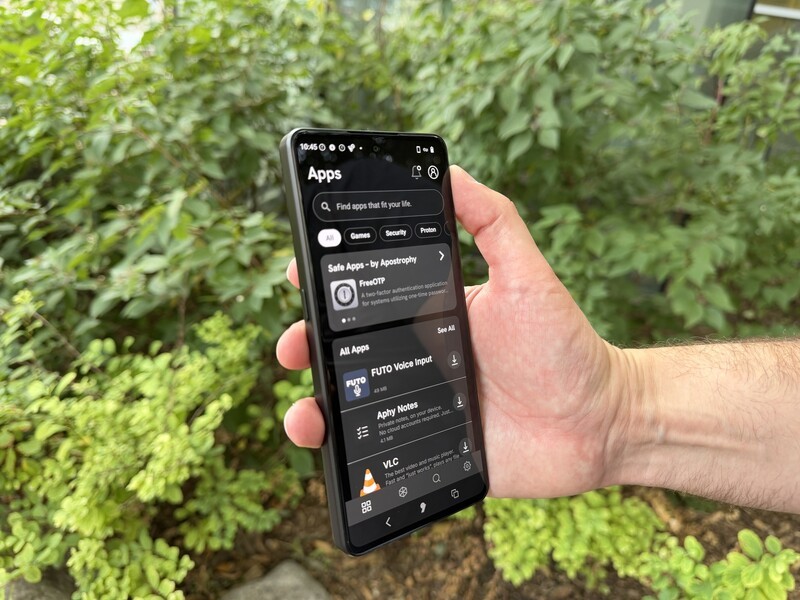
Today, the battleground has shifted from desktop web browsers straight into the mobile app ecosystem. On conventional mobile operating systems, third-party apps come embedded with commercial Software Development Kits (SDKs). These background scripts continuously query non-permissioned hardware metrics to profile users:
1. Cross-App Profiling Without Serial Numbers

Modern privacy regulations prevent casual apps from reading your device's permanent IMEI or hardware serial number. To get around this, ad trackers use ambient fingerprinting. By cross-referencing your exact battery drain curve, internal operating temperature, screen brightness, and accelerometer vibrations, algorithms construct a digital fingerprint reliable enough to identify you across apps that supposedly have no connection to one another.
2. Inferring Executive Behavior and Daily Schedules
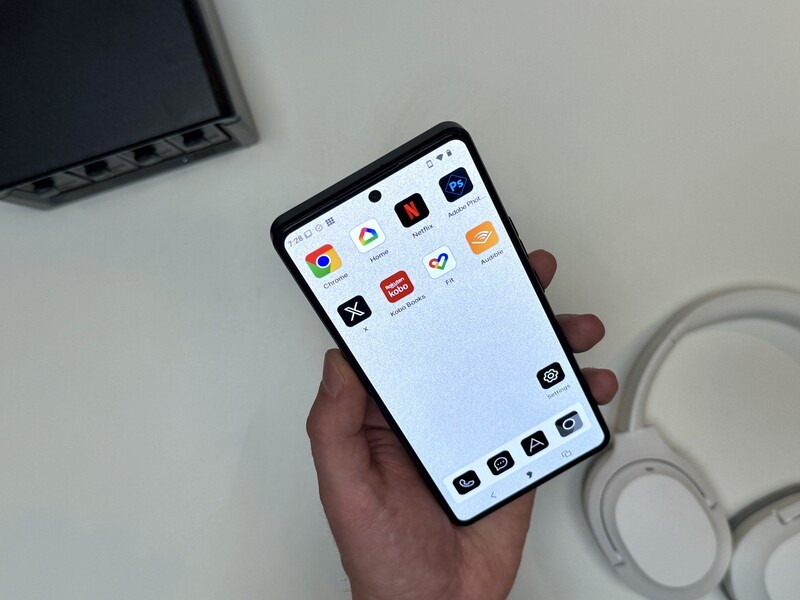
Your battery drain rate directly mirrors what your phone is doing. When your processor works hard, battery discharge spikes. By tracking recharge schedules and idle periods, background analytics can accurately map out your life:
- What time you wake up and go to sleep.
- How long your daily commute takes.
- When you transition from low-power desk work to intensive tasks.
All of this is deduced without the app ever asking for access to your calendar, motion sensors, or location.
3. Predatory Pricing and Behavioral Urgency

When your phone battery drops below 5%, your psychology changes. You enter panic mode. Ride-hailing executives have publicly acknowledged that users with dying batteries are statistically far more willing to accept higher surge pricing just to guarantee a ride home. When an app knows your hardware is about to die, a basic battery metric becomes commercial leverage used against your decision-making.
How AphyOS Neutralizes the Threat by Default
Standard smartphone platforms attempt to fix these problems with endless settings menus and user toggles. But forcing users to micromanage background permissions for fifty individual apps is a losing battle.
Real digital defense requires an operating system built from the ground up to eliminate surveillance hooks.
TRADITIONAL OS vs. APHYOS
| STANDARD SMARTPHONE | APOSTROPHY OS (AphyOS) |
|---|---|
| Apps read analog hardware | Hardware metrics normalized |
| Continuous Google telemetry | Decoupled from GMS |
| Apps share background space | Dual-space Vault isolation |
| Silent background daemons | Level 5 zero-trust sandbox |
This first-principles approach defines AphyOS (the operating system powering the European-assembled Punkt. MC03):
- Normalized Hardware Signals: AphyOS prevents third-party software from abusing analog hardware metrics. System telemetry is mediated and sanitized, preventing apps from harvesting the decimal-level readings required to build persistent hardware fingerprints.
- Complete Decoupling from Google Services: Traditional mobile platforms stream constant device diagnostics back to central hyperscaler servers. AphyOS removes Google Mobile Services (GMS) entirely, cutting off the background data pipeline that monitors device states 24/7.
- True Dual-Space Isolation (The Vault vs. Wild Web): On the MC03, critical corporate communications, encrypted email, and personal data live inside The Vault—a hardened, zero-telemetry environment. When you run everyday consumer applications in the Wild Web, they are trapped inside isolated Privacy Bubbles at default Level 5 lockdown. Third-party tracking scripts cannot monitor your Vault activity, read corporate memory spaces, or execute background listeners when closed.
What Organizations and Consumers Must Demand
The lesson of the leaking battery is clear: a permission prompt is only as secure as the telemetry an operating system permits around it.
Ticking a box that says "Don't track my location" accomplishes little if the operating system allows third-party code to measure your battery drain, log your Wi-Fi neighborhood, and broadcast your daily habits across borders.
True digital sovereignty means moving past the illusion of the settings menu. It means deploying mobile architecture that treats system telemetry with the same strict scrutiny as a camera lens, keeping private hardware private by design.
Read more

Thinking of Buying a Pixel for GrapheneOS? Check Apostrophy First
Thinking of buying a Pixel just to flash GrapheneOS? Explore the real-world trade-offs of DIY privacy ROMs vs. out-of-the-box sovereignty on the Punkt MC03 with Apostrophy OS.
5 Creepy Things Your Smartphone Does Before You Even Touch It
Here is what your tech-obsessed friends wish you knew about that brand-new phone in your hand.

The actual cost of "free" online services
While services provided by Big Tech may not cost you money, they do cost your privacy. This article explores how companies like Google make billions of dollars by tailoring custom advertisements to the individual by collecting data on them via multiple methods.

The Security Advantage of PINs Over Biometrics
While biometrics do an excellent job of blocking casual nosey friends or opportunistic thieves, they fail dramatically when facing institutional observation, border checkpoints, or corporate espionage.