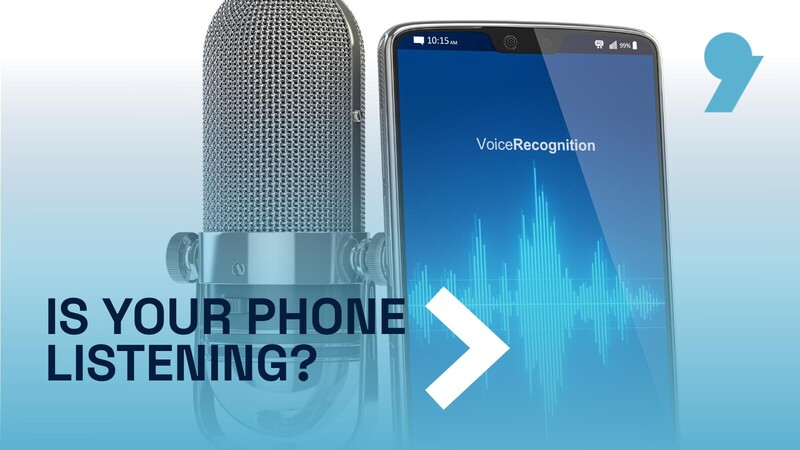
We've all experienced that unsettling modern phenomenon: you have a casual, spoken conversation with a friend about a niche product, a destination, or a business goal. You never type it into a search box, and you never post about it online. Yet, within hours, your social media feeds and web browsers are flooded with highly targeted advertisements for that exact topic.
While tech conglomerates consistently deny that their devices are actively recording your private life, the underlying hardware architecture of conventional smartphones reveals a profound and structural privacy vulnerability.
For true data sovereignty, simply clicking a software "mute" button or toggling a digital permission can actually be an illusion. True acoustic security requires physically dropping the electrical power to your device's recording sensors.
The Mechanics of the "Passive Ear"
For a smartphone to respond instantly to convenient hands-free voice triggers like "Hey Siri," "Hey Google," or real-time context prompts, the system's acoustic parsing pipeline can never truly sleep.
Google and Apple have guardrails in effect to prevent bad actors from using this data, but as you swipe through that laundry list of terms and conditions on a certain app just to get to the "accept" button, you may be swiping away those safeguards.
Inside standard smartphones, the microphone system relies on a continuous, low-level electric current flowing to the sensor membranes. When your display is turned off and your device sits idly on a desk, a dedicated, low-power hardware processor (often called an audio subsystem or DSP) is continuously processing ambient sound waves. It analyzes the acoustic signal against local phonetic templates, waiting for a specific match (like "Hey Siri/Google".
Because this hardware layer must remain alive to capture voice commands, it functions as a persistent entry point.
If a malicious application exploits a system vulnerability, or if a chipset's proprietary firmware includes un-audited telemetry background tracking, that active data line can be quietly read. The electrical signal is being converted into data, and you are entirely dependent on un-audited software layers to tell you whether that data is being thrown away or secretly logged.

Inaudible Acoustic Leakage: The Stealth Threat Vector
The privacy risk of an always-powered microphone goes far beyond common advertising scraping. Advanced security research has demonstrated that data can be extracted from a device using acoustic frequencies that are completely imperceptible to the human ear.
In documented security environments, researchers have successfully used ultrasonic data extrication techniques to bypass traditional security firewalls. Malicious background scripts can modulate a phone's hardware components to emit or receive hidden data signals through inaudible background frequencies.
For example, sensitive encryption tokens or system identifiers can be silently broadcast over the microphone line while a user is performing a completely unrelated task. If the microphone parsing architecture continuously draws current, it remains a live portal for automated, undetectable data transfer.
The Security Theatre of Software "Kill Switches"
In response to growing privacy concerns, some niche mobile manufacturers have introduced physical hardware switches on the casing of their phones, claiming they cut power to the camera or microphone.
While a step in the right direction, from a strict engineering perspective, many of these implementations may ultimately function as "security theatre," rather than a trusted killswitch.
Unless you have audited the exact multi-layered circuit traces on the motherboard, a toggle switch is often just a digital trigger that tells the software to turn off the input.
You are still forced to place absolute blind trust in the manufacturer's internal controller code to execute that command. If a kernel-level utility or proprietary hardware blob bypasses that switch logic on a hardware level, the sensor remains active.
How AphyOS Enforces Absolute Acoustic Silence
AphyOS approaches mobile hardware isolation with a clear, uncompromising rule: when a sensor is not intentionally in use, it must draw zero electrical power.
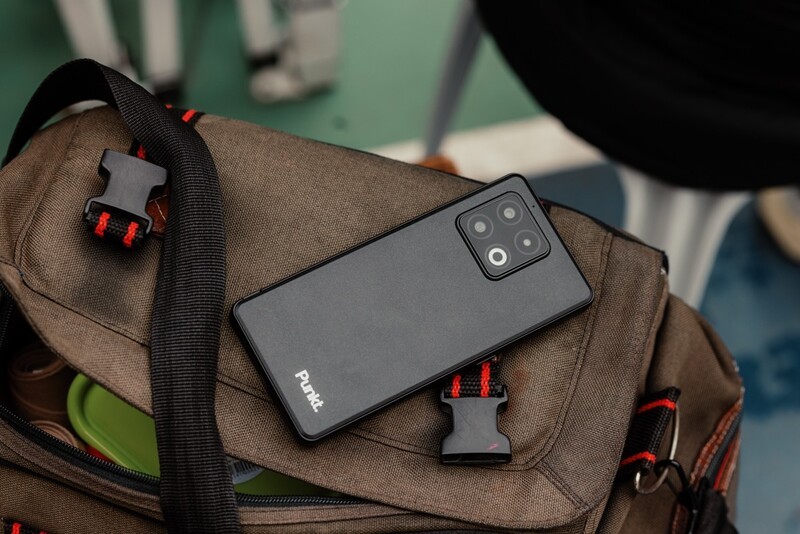
During the system compilation and architectural layout of the software platform driving the Punkt. MC03, our engineering team implemented strict, low-level modifications to disable hidden tracking vectors completely:
- Total Removal of Ambient Triggers: We stripped out all background voice-activation frameworks, ambient assistant monitoring loops, and face-tracking algorithms directly from the source code.
- True Power-State Disconnect: When you exit an authorized voice call or close a secure recording application, AphyOS does not just mute the software input. It drops the active command line to the physical microphone hardware entirely. The current drops to absolute zero, rendering the sensor physically incapable of transforming sound waves into electrical signals.
- The 3.5mm Analog Standard: While mass-market smartphone brands aggressively phase out analog ports to trap users within wireless Bluetooth ecosystems running unverified closed-source firmware, AphyOS preserves the legacy analog audio jack.
An analog 3.5mm connection functions as an ideal physical isolation barrier. Because it operates on direct, tangible hardware contacts, you can visually and mechanically verify the connection state.
Unplugging an analog accessory provides a level of absolute physical trust that no wireless, un-audited Bluetooth chip can ever deliver.
By combining strict software-level power isolation with native analog support, AphyOS transforms the smartphone back into a controlled, highly secure tool that only listens when you explicitly tell it to.
Having "Hey Siri" and "Hey Google" available is extremely convenient. But, for the most privacy-focused users we say "Hey, be thoughtful about that microphone."
Q&A: Audio Telemetry and Device Hardening
Why do smartphones track voice conversations when turned off?
To support voice activation and smart assistant features, traditional smartphones maintain a constant, low-level electrical current to their internal microphone hardware. This always-on architecture allows the background audio digital signal processor (DSP) to continuously parse ambient sound waves for wake words, creating a vulnerability that can be exploited by un-audited background telemetry scripts.
What is ultrasonic data extrication in mobile security?
Ultrasonic data extrication is an advanced security exploit where malicious software transmits or receives sensitive device information using high-frequency sound waves that are completely inaudible to human ears. This technique allows compromised hardware to quietly exfiltrate data across short physical distances without triggering standard network monitoring or user permissions.
Why are software mute buttons unreliable for true privacy?
A software mute button or digital settings toggle does not cut electrical power to a device's microphone sensor; it merely tells the operating system's software framework to ignore the inbound audio stream. If the phone is compromised by a low-level kernel exploit or an un-audited chip-level firmware blob, the digital restriction can be bypassed, allowing background recording to occur without the user's knowledge.
How does AphyOS guarantee microphone privacy on the Punkt. MC03?
AphyOS guarantees absolute acoustic privacy by completely removing all ambient voice-activation assistant frameworks from the operating system source code. When an authorized audio application is closed, the system drops the active electrical signal to the microphone hardware entirely, dropping sensor power to zero so it cannot capture acoustic data.
Read more

How AphyOS and the Punkt. MC03 Solve Android’s Hardware Security Blindspot
In This Article The Illusion of Application-Layer Security Deep Engineering: The Low-Level Difference Why Hardware Partnerships Matter 🔒 TL;DR - The Short Version Verdict: Toggling app permissions on standard Android devices does not prevent kernel-level data harvesting; true mobile privacy requires hardware-bound cryptographic security. Strength: AphyOS leverages Swiss-...

The Punkt. MC03 (The Next Apostrophy Powered Smartphone) is Available Now
A new phone has entered the market that is powered by Apostrophy, the world's leading privacy-by-default operating system. The Punkt. MC03 is now shipping, giving users who want a more secure option for doing business, while still being able to use familiar apps, an excellent option for both hardware and software.

AphyOS-enabled Punkt. MC03 now available through Deutsche Telekom
Europe’s largest telecommunications provider officially lists the German-built, Swiss-governed sovereign smartphone in its online shop.

The Security Advantage of PINs Over Biometrics
While biometrics do an excellent job of blocking casual nosey friends or opportunistic thieves, they fail dramatically when facing institutional observation, border checkpoints, or corporate espionage.