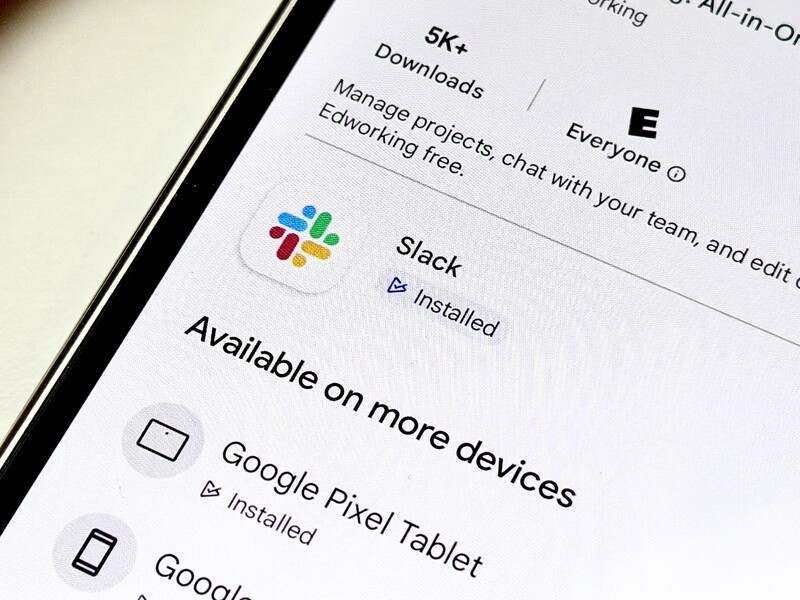
When standard enterprise apps like Microsoft Teams or Slack are deployed within a de-Googled AphyOS environment, they run inside the system's isolated application space (specifically layered over a tailored sandbox framework).
Because AphyOS operates completely free of Google Mobile Services (GMS), these applications face a hard environment shift. The native Google libraries they rely on for push notifications, location triangulation, and licensing checks are completely absent.
Does this mean these apps are unseable in AphyOS? Of course not! Here's how we maintain our privacy-first approach with these common corporate messaging apps (and the trade-offs if you want to use them on your MC03).
AphyOS bridges this gap by utilizing a highly developed sandboxed translation layer derived from trusted GrapheneOS infrastructure. Unlike custom ROMs that grant deep system privileges to an emulation layer, AphyOS isolates the execution of these services.
TL;DR — The Short Version
- Verdict: Apostrophy OS running on the Punkt. MC03 provides an exceptional, sandboxed translation layer for prosumers using Slack and Teams, but falls short of high-security enterprise fleet compliance.
- Core Strength: Uses a highly advanced, unprivileged GmsCompat framework to route push alerts through Quad9 DNS without leaking metadata or device telemetry to Google servers.
- Key Trade-off: Sacrifices native, automated background synchronization; enterprise communication tools are entirely containerized away from core secure data vaults.
- Hardware Reliability: Excellent software-level sandboxing, but throttled at the hardware startup layer by an 8-byte MediaTek preloader validation limitation.
- Data Connectivity: Strict network isolation forces all application web lookup requests through secure, cryptographically hashed DNS paths.
- Value Proposition: Perfect for privacy-first professionals seeking standard app utility, but currently hitting a wall with remote wiping and hardware attestation via Esper MDM.
The Sandbox Translation Layer & Push Notifications
When Slack or Teams attempts to register for push notifications, they look for standard Google Transport layers (Google Cloud Messaging/Firebase Cloud Messaging).
The Translation Layer: AphyOS uses a sandboxed translation framework (integrating heavily developed code built on GmsCompat architectures). The OS intercepts the app's GMS API calls and reroutes them safely within an unprivileged bubble.
The Result: Slack and Teams can successfully register their push tokens, allowing you to receive real-time message alerts. However, because they are stripped of background telemetry privileges, they cannot silently wake up and scrape deeper device identifiers or system activity.
Network Isolation and Data Siloing
When working inside the runtime environment, enterprise communication tools are bounded by strict profile constraints.
The Vault Separation: If these communication apps are assigned to the everyday app space, they are prevented from seeing or touching the hardened, isolated Vault Space. Their memory registers are entirely sandboxed. They cannot sniff local file directories, read data from private personal information management (PIM) apps (like Aphy Mail or Contacts), or access keys residing in the system's storage.
The Network Constraint: While standard Android allows massive background network chatter, AphyOS restricts these sandboxed apps. They are forced to comply with default system routing, such as sending all web lookups directly through the encrypted Quad9 DNS resolver, preventing the apps from mapping your network environment or leaking plain-text local metadata.
Real-World Field Testing: Cross-Border Carrier Profiles and Euro-Roaming
To truly understand how this sandboxed environment behaves, you have to take it out of an air-conditioned lab and throw real-world friction at it.
When running a continental enterprise fleet across European borders, carrier-side telemetry harvesting is a constant corporate risk.
On standard devices, Tier-1 providers like Deutsche Telekom, Vodafone, and Orange aggressively deploy IMS and diagnostic OTA (Over-The-Air) packages that broadcast background device metrics as you transition networks.
Under AphyOS, running Teams or Slack within an unprivileged sandbox container means that when an executive catches the Eurostar from Paris to London, or drives across the German-Austrian border, the enterprise applications cannot intercept or read the shifting SIM profile properties. While your 4G/5G data connectivity and VoLTE voice calls route seamlessly at the isolated hardware baseband layer, the app remains completely blind to carrier-side diagnostic strings.
The friction occurs if your corporate IT architecture requires strict carrier-IP validation or relies on native mobile network operator (MNO) tokens for single sign-on (SSO) authentication.
Because AphyOS intercepts these low-level tracking packets, automated corporate logins within Teams may occasionally drop during cross-border handoffs, requiring the user to manually re-authenticate via a secure authenticator app.
Apostrophy OS for Enterprise? Yes, but...
While this sandboxed translation layer works beautifully for the lifestyle prosumer who demands a fluid, usable experience with Slack and Teams without the Google tracking tax, a deep dive into the underlying code reveals why this setup hits a wall for certain high-security corporate deployments.
MDM Roadblocks: While AphyOS has built out custom remote management logic by integrating with Esper MDM, certain advanced enterprise features (like deeper hardware attestation and ironclad, policy-based remote wiping) encounter friction because the core hardware-backed Secure Element (StrongBox/KeyMint framework) is still managing notable integration challenges and initialization bugs in the code repositories.
Ultimately, Slack and Teams execute cleanly and stay isolated from your private data, making the platform an exceptional upgrade for a privacy-focused prosumer. Depending on the balance of security needs vs. useability within your organization, the combination of Apostrophy as an operating system and the Punkt. MC03 as a hardware choice provide a more secure environment for corporate fleets than standard smartphone alternatives.
FAQ
Can I run corporate banking apps alongside Slack on AphyOS?
Yes, but they are strictly isolated. AphyOS utilizes a sandboxed application framework that prevents tools like Slack from inspecting neighboring memory registers, ensuring your corporate communication tools can never sniff data from your financial profiles or private enterprise apps.
Why do Slack push notifications sometimes delay on public European Wi-Fi?
Because AphyOS strips away native Google Mobile Services, apps cannot use persistent, unencrypted background tracking connections. AphyOS cryptographically hashes and forces all network requests through Quad9 DNS, which can introduce minor notification routing delays on highly restrictive captive portals or public network infrastructures.
Does the Punkt. MC03 support remote wiping via MDM?
Basic remote management is supported through custom integrations with Esper MDM. However, full hardware-backed remote policy wiping currently faces code-level initialization limitations within the StrongBox framework, meaning it may not pass strict European government or critical infrastructure fleet compliance audits.
Will my Deutsche Telekom, Vodafone, or Orange carrier features work on Apostrophy OS?
Standard 4G/5G data roaming, SMS routing, and VoLTE voice calls work natively across Europe. However, carrier-side tracking packages, diagnostic metadata compilation, and automated carrier-IP authentication strings are actively intercepted and blocked by the AphyOS isolation architecture.
Read more

Mobile Patient Zero
With employees using their smartphones as a device to access work tools, new vulnerabilities have opened up for bad actors to infiltrate corporate networks. These are some of the ways they're pulling it off.
Do you get free access to Proton apps with AphyOS?
Big Tech productivity apps aren't really free; while they may not charge money, they are harvesting your data and selling it to the highest bidder, or with the stroke of a pen may be providing it to national governments. Enter Proton, where Swiss privacy laws and dedication to data security meet to provide a truly free-to-use suite of mobile productivity applications. Learn more about...

The Real Cost of a Data Breach
Data breaches through smartphones continue to grow in frequency and cost. Here's how this is skyrocketing baed on the latest reports.

Meet Apostrophy - The Sovereign Operating System For Modern Smartphones
For those who want privacy that is unrivalled in the modern smartphone era, European corporations looking to comply with data privacy legislation, and enterprise professionals looking for a zero touch fleet solution, Apostrophy has become the go-to option as an OS in the sovereign smartphone space.